
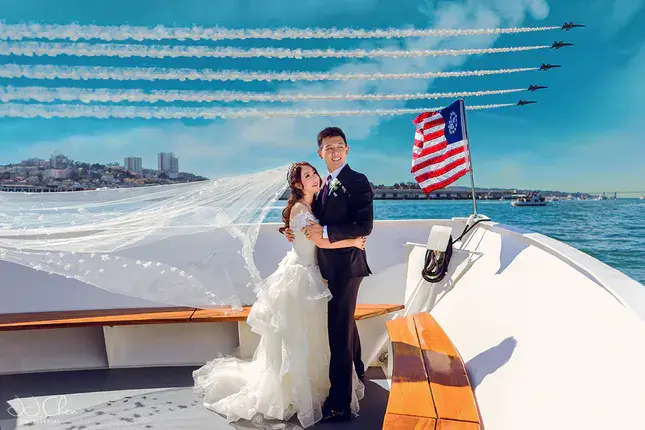
How to Become a Wedding Officiant: Who Can Legally Act as a Wedding Officiant for Your Wedding on the Bay?
California does not issue a wedding officiant license. State law gives the authority to perform marriages to ordained ministers, judges, certain elected officials, and people a county deputizes for a single day. The couple still needs a valid marriage license before anyone can lead a legally binding ceremony.
That split confuses many people planning a wedding on the bay. This guide explains how to become a legal wedding officiant, what the license requires, and what officiant duties look like at San Francisco wedding venues, including a private yacht on open water.
Here is the short answer. The couple’s license comes from the county clerk, and the officiant’s authority comes from ordination through a ministry such as Universal Life Church or from one-day deputization. The officiant confirms consent, collects each signature, and returns the license to the issuing county within 10 days.
5 key takeaways
- California has no standalone wedding officiant license; ordination, deputization, or a qualifying public office gives an officiant legal authority under Family Code Section 400.
- Couples apply in person at a county clerk’s office, and the license stays valid for 90 days from the date of issue.
- Anyone 18 or older can get ordained online for free, and California keeps no central registry of officiant credentials.
- The officiant must return the signed license to the issuing county within 10 days of the ceremony.
- A ship’s captain has no automatic authority to marry a couple in California, which means yacht weddings on San Francisco Bay need an ordained, deputized, or otherwise authorized officiant on board.
A California marriage license comes before any wedding ceremony
Two people planning to marry start at the county clerk’s office. Both partners appear in person, show valid photo ID, and pay a fee that each county sets on its own. The license stays valid for 90 days, which makes it smart to book the appointment close to the wedding date.
This step applies to every marriage in the state, no matter who officiates. Many of the best wedding venues in the Bay Area keep a list of ministers authorized to officiate, which helps when the planning window is tight.
Public and confidential licenses have different witness rules
A public license becomes part of the public record, and the license requires at least one witness signature, with room for a second. A confidential license stays sealed, allows no witness signatures, and is open only to couples who already live together.
Most Bay Area couples choose a public license. The clerk issues either type, collects the fee, and confirms both people meet the age and identification rules before the appointment ends.
Documents the license application requires
- A valid, government-issued photo ID for each person (driver’s license, passport, or state ID)
- Social Security numbers, if available, though the state doesn’t require them
- Payment for the license fee, which varies by county
- Both people, in person, at the same time
California license rules fit on one short list
- No blood test or waiting period
- Minimum age is 18, though minors can marry with a court order and parental consent
- The license is valid for 90 days from the date of issue
- The ceremony must take place inside the state, and any county can issue the license
- A public license needs one witness at minimum, and a confidential license allows none
California grants officiant authority instead of a license
People searching for a wedding officiant license in California usually want to know what makes an officiant legal. The answer sits in California Family Code Section 400, which authorizes priests, ministers, rabbis, and authorized people of any religious denomination who are 18 or older. The same law covers judges, commissioners of civil marriages, and certain current or former elected officials.
Every officiant must have legal authority under that law before the ceremony starts. According to the California Department of Public Health, officiants don’t file credentials with a clerk or anyone else, and the state keeps no central registry of clergy.
That makes California one of the simpler states for first-time officiants. A friend can get ordained today and legally officiate a wedding this weekend, as long as the couple holds a valid license.
Online ordination is recognized for friends and family
State law treats ordination by a religious denomination as the source of an officiant’s authority. Online ordination recognized under that rule counts the same as any other, which covers most friends and family members who officiate a single wedding.
Universal Life Church, American Marriage Ministries, and Christian Leaders Institute all run free ordination programs, and most post state-by-state resources for new ministers. Carrying a copy of your officiant credentials answers any question a venue or couple raises.
One-day deputization gives non-ordained officiants authority
Couples who want a friend to officiate without a religious credential can ask about deputization. Many counties appoint a deputy commissioner of civil marriages for a single day in exchange for a fee and a short application, and that authority extends across the whole state.
The deputy-for-a-day program varies by county, and some offices want the request weeks ahead. That puts this paperwork early on the planning calendar.
Four steps make you a legal wedding officiant in California
- Confirm the basics: The officiant must be 18 or older, with no residency requirement.
- Get ordained: Choose an online ministry, complete the free ordination, and save a copy of the certificate.
- Or get deputized: Submit a request to the county, pay the fee, and receive authority for one ceremony on one date.
- Handle the license: Review it before the ceremony, collect each signature, and return it to the issuing county within 10 days.
Officiant training programs build ceremony skills
Officiant training programs cover ceremony structure, vow writing, and the legal wording a marriage needs. Some celebrant training courses also teach public speaking and pacing for professional officiants.
California law requires no training certificate. A polished marriage ceremony still depends on the person who performs it practicing the script out loud.
Wedding officiant duties cover the entire wedding ceremony
A wedding officiant confirms the couple’s consent and handles the license from start to finish. These duties apply to ordained ministers and deputized officiants alike, including those officiating at one of the top wedding venues in San Francisco.
The officiant leads the ceremony, oversees the vows, and confirms each signature is correct before anyone leaves. Afterward, the officiant returns the license to the county recorder in the issuing county within 10 days, as CDPH marriage license guidance explains.
A wedding officiant’s core duties include:
- Reviewing the couple’s license before the ceremony begins
- Welcoming guests and opening the ceremony
- Confirming the couple’s consent, out loud, in front of the witness
- Leading the exchange of vows and rings
- Pronouncing the couple married
- Collecting signatures from the couple and witness on the license
- Returning the signed license to the issuing county within 10 days
Skipping any step can delay how quickly the marriage gets recorded. Ministers who officiate often keep a simple checklist and use it for every ceremony.
The officiant you choose shapes the whole ceremony
Couples generally choose from three types of officiants: a religious minister, a civil officiant such as a judge or deputized county representative, or a friend or family member who gets ordained for the occasion. Each option is legally valid once the paperwork is handled correctly, which leaves the choice to tone and personality.
- A religious minister brings faith-based readings, rituals, and language that match the couple’s tradition.
- A civil officiant or professional celebrant keeps the ceremony secular and shorter, a good fit for couples who want a simple, legally focused service.
- A friend or family member who becomes ordained for the day can personalize the ceremony with stories a hired officiant wouldn’t know.
Interfaith and Christian ceremonies follow the same legal rules
An ordained minister can lead an interfaith civil ceremony as long as they hold legal authority to officiate. Christian ministers, rabbis, and officiants from other traditions all follow the same license steps.
An experienced officiant can blend readings, prayers, and rituals from two or more faiths into one ceremony. The roots of traditional ceremonies run deep, and blended services are common at Bay Area venues, including yacht weddings on San Francisco Bay.
Ceremony planning and rehearsals set the tone for the marriage ceremony
Wedding planning starts with checking your county’s rules early. Procedures for licenses, deputization, and appointments vary from one Bay Area county to the next.
Choose a place that fits the mood and holds your guest count comfortably. Then write a ceremony script with your readings and vows, and share it with the officiant well ahead of the date.
A ceremony rehearsal usually happens the day before the wedding. The officiant walks the wedding party through the processional, positions at the altar, timing for readings and vows, and the recessional.
The rehearsal also gives the officiant time to coordinate with the venue, musicians, and other vendors. Experienced yacht wedding planners manage that coordination as a matter of routine.
Weddings on the water add a few planning details
Weather, wind, and boarding times shape the timeline for a wedding on the bay. A rehearsal that walks through the day from boarding to docking matters more on a yacht than at a fixed venue.
Couples planning a spring wedding on San Francisco Bay often build the ceremony around sunset timing. The light shifts fast once the boat leaves the dock, and our complete guide to having a wedding on a yacht covers the rest of the logistics.
Premarital counseling is optional
State law does not require premarital counseling for a legal marriage. Some religious organizations and ministers offer it as part of their officiant service.
Premarital sessions cover communication, finances, and expectations for married life. If counseling matters to you, ask your officiant whether they provide it or can recommend a qualified counselor.
Officiant requirements change in your state
Minister registration rules differ from state to state, and some states require officiants to register before any ceremony. A couple from Texas or New York planning a Bay Area wedding, or a California couple planning a destination wedding, should check local rules before booking an officiant.
Two rules hold across state lines: the couple needs a valid license, and the officiant needs credentials the state recognizes. Anyone researching how to become ordained should start with the state where the wedding takes place, not the state where they live.
New York City and Nevada require officiants to register
New York City requires officiants to complete marriage officiant registration with the Office of the City Clerk before performing a ceremony in the city. The rest of New York State handles officiant rules differently, which makes a quick call to the local office worthwhile.
Nevada requires ministers, religious officials, and notaries public to get a certificate of permission from the county clerk before they perform marriages. Out-of-state ministers can apply for permission to perform a single ceremony, which helps couples who bring a hometown officiant to Las Vegas.
Texas, Florida, and North Carolina set their own officiant rules
Not just anyone can officiate in Texas. State law authorizes licensed or ordained Christian ministers and priests, rabbis, officers of religious organizations, and current or retired judges, and Texas has no registration process for qualified officiants.
Florida lets ordained ministers, judges, and notaries public perform marriages, though a Florida notary can only officiate inside Florida. North Carolina accepts ordained ministers and magistrates and requires at least two witnesses at the ceremony.
A ship’s captain needs officiant credentials to perform a yacht wedding
Bay Area couples can get married at sea aboard a private yacht, but the captain’s role surprises many people. California counties state plainly that ships’ captains have no authority to perform marriages unless they also qualify under Family Code Section 400.
A captain who is ordained or deputized can marry you on deck, and any authorized officiant you bring aboard can do the same. Getting married at sea needs the same legal groundwork as a ceremony on land.
Luxe Cruises & Events hosts private yacht weddings on San Francisco Bay, and the Luxe fleet holds groups from intimate ceremonies to full receptions. Read about Bay Area yacht celebrations for guest planning and personalization details.
How Luxe Cruises & Events can help couples marry legally on the bay
Luxe Cruises & Events owns and operates its own fleet from Alameda, which gives couples direct access to the vessel, the crew, and the planning team. Our event planners coordinate your officiant’s boarding, the ceremony timeline, and the moment the license gets signed on deck.
In-house catering from our menus and planners who know Bay weather keep the day on schedule. Our team also walks couples through the 90-day license window and the 10-day return deadline, which keeps the paperwork from slipping.
Couples who want to learn more about the setting can read why a luxury yacht charter makes a strong Bay Area wedding venue or browse the best wedding venues in the Bay Area for a yacht wedding. Questions about deposits, boarding, and guest counts are answered on our FAQ page.
Answers to common officiant license questions
Do you need a wedding officiant license to officiate in California?
No. California issues no standalone officiant license and keeps no registry of officiants. Authority comes from ordination, one-day deputization, or a qualifying office such as judge or elected official.
How much does a wedding officiant license cost?
Online ordination through most ministries is free, with optional fees for printed certificates or packages. One-day deputization costs a fee set by each county, and states that require officiants to register, such as Nevada, charge an application fee.
Can you get a wedding officiant license online?
You can get ordained online, and California recognizes that ordination for performing marriages. States with registration rules, such as Nevada and New York City, still require a separate application after online ordination.
How long does it take to get certified as a wedding officiant?
Online ordination usually takes minutes, and no further filing is needed in the Golden State. Deputization and out-of-state registration take longer, with some Nevada counties quoting two to three weeks for processing.
Can a ship’s captain officiate a wedding on San Francisco Bay?
Only if the captain is ordained, deputized, or otherwise authorized under Family Code Section 400. Being a captain grants no authority to marry a couple, which means couples should confirm credentials or bring their own officiant aboard.
Your San Francisco Bay wedding starts with one conversation
Bring your own ordained minister, deputize a friend, or ask us about officiants with the right credentials. Each path works once the license and the officiant’s authority line up.
Luxe Cruises & Events handles the setting, catering, crew, and timeline, and our planners help you keep the paperwork on track. Request more information about yacht weddings on San Francisco Bay to check dates, pricing, and vessel options.
Call 510-263-9790 or email hello@luxecruises.com to speak with a wedding specialist. Tell us your date and guest count, and we’ll send options for your wedding on the water.